Education: Drafting the Budget

Office of University Initiatives
Gil Harootunian, PhD, Executive Director
Angelica Lopez, Administrative Analyst Specialist
Planning the Budget
Before you begin the line item budget, think about—
• What is the purpose of the budget from the agency’s perspective?
• What are the roles and responsibilities when working with the university to review
and approve your budget?
• What is the scope envisioned by the sponsor?
What is a budget?
The agency wants your budget to be no less than the financial expression of your proposed work. A good budget shows program officers and reviewers that you have planned a financially viable project, you will be able to track and manage project expenses efficiently and transparently, and you will be able to make course corrections as needed. Program officers and reviewers study in detail the budget because they will be awarding you taxpayers’ monies.
Creating a budget that is competitive for national grant programs requires meticulous
planning and compliance with federal regulations, encompassing two essential elements:
1. What You Do - Think about the roles and responsibilities of all personnel; where you need to travel
and why; what internal supports you need (such as equipment) and what external support
you need (such as an independent evaluator).
2. What We Do - We support all technical aspects of the line item budget and Budget Justification.
Reach out to us early. We will help you, and then begin the institutional review and
approval process.

Scope
The budget ceiling ($100,000 or $5,000,000?) reflects the scope of work (SOW) that the sponsor wants. What can you accomplish within that scope? Sketch out your budget to align with the SOW. If the draft of your budget is under or over the sponsor’s budget ceiling, ask us for help to align your budget with the sponsor’s SOW.

Line-Item Budget

Calculating the Costs:
Total Direct Costs and Total Indirect Cost
How much money do you have for direct costs? That depends on the indirect cost rate….

Step 1: Calculating Direct Costs vs. Indirect Costs
The university’s Indirect Cost Rate is 40%. If you are applying for a federal award
with a budget ceiling of $500,000, divide $500,000 / 1.4 = $357,142.
Totals Available:
Direct Costs = $357,142
Indirect Costs (remaining) = $142,858
Step 2: Calculating Modified Total Direct Costs
Certain categories, such as Equipment, Participant Support, and Subawards in excess
of $50,000, are exempt from indirect costs. Subtract these from Direct Costs, and
then calculate the Indirect Costs.
Example: $500,000 budget ceiling
1. Direct Costs include $25,000 in Equipment + $75,000 in Participant Support.
2. Direct Costs eligible for Indirect Costs: $400,000 ($500,000 - Equipment ($25,000)
+ Participant Support ($75,000).
3. Direct Costs eligible for charging Indirect Costs: $285,714 ($400,000 / 1.4)
4. Indirect Costs: $114,286 (remaining funds)
5. Total Direct Costs available: $385,714
Modified Total Direct Costs: Exempt Thresholds
The Code of Federal Regulations increased the thresholds for certain categories that
are exempt from indirect cost charging. As of October 1, 2024:
1. Equipment = $10,000 and above
2. Materials and Supplies = up to $10,000
3. Subawards = in excess of $50,000
Federal Programs with reduced ICRAs
Please note that Educational Grants do not always permit an applicant to use their
university’s full Indirect Cost Rate, which is calculated for Research Grants.
• Institutional Capacity Grants typically do not allow charging of IDC: 0%.
• Major Training Grants usually have a reduced IDCR: 8%.
Final Advice: Make sure budget reflects technical aspects of award.
For example, what is the start date of the Grant. The federal fiscal year starts October
1st and end September 30th. This may impact your award’s start and end dates. If so,
when planning the budget for the fall semester in the first year, faculty will not
be eligible for Release Time because the grant start date would have had to be in
the summer.
Solution: Use October, November, December as a planning period for your major award.
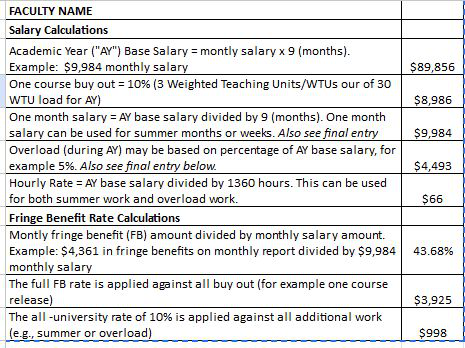
The first thing University Initiatives does is ask who will be involved in the proposal? Once we are notified we will run salary reports on all Faculty and Staff involved:
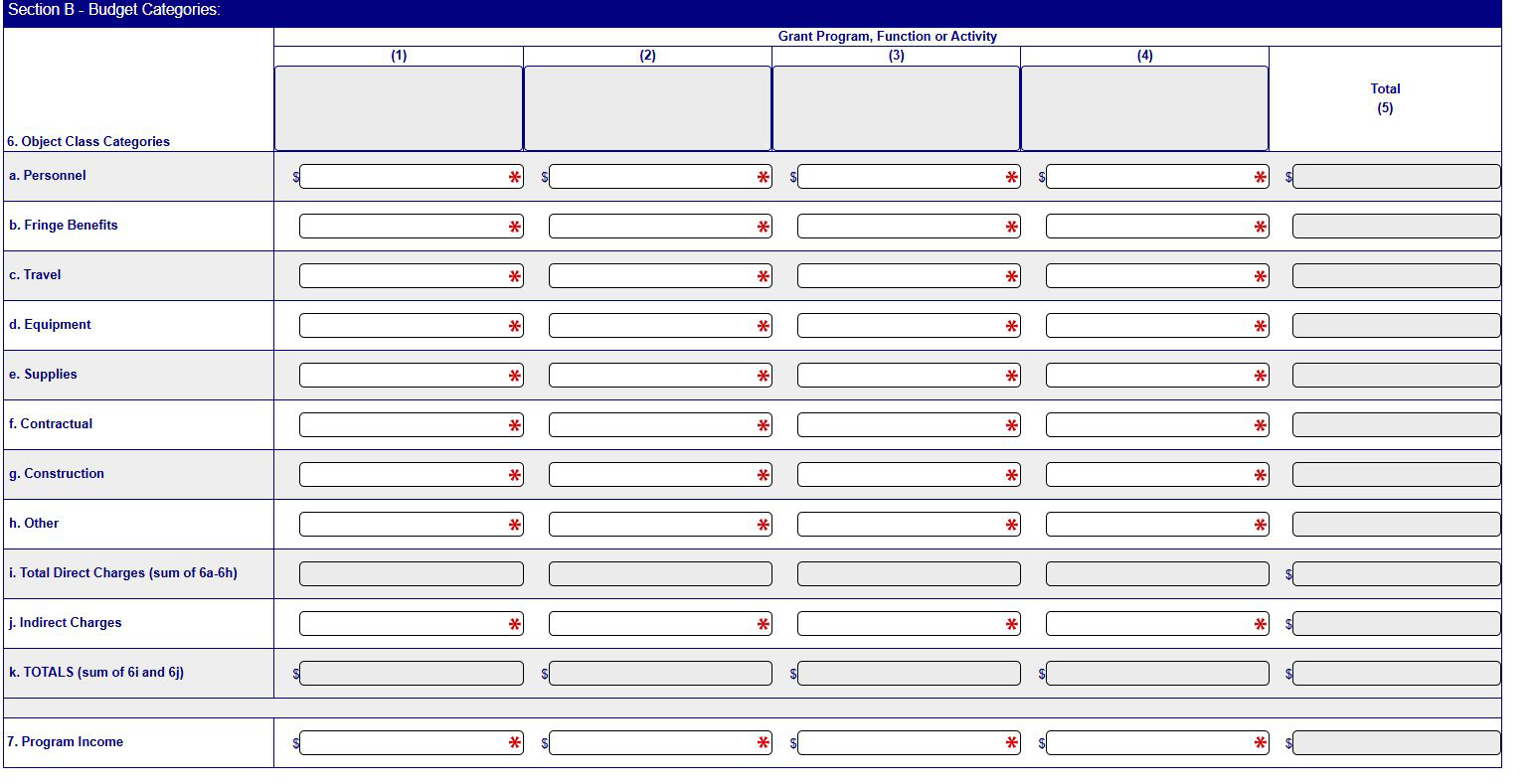
The following budget categories outlined below must be accounted for during each year of the grant.
Budget Justification

A good budget justification explains and justifies each cost in the grant budget,
ensuring all expenses are reasonable, necessary, and allowable under the funding guidelines.
A strong justification should be clear, concise, and aligned with the project's goals.
Below you will find information extracted from sponsored guidance for various grant
applications as well as examples obtained from grant submissions prepared by University
Initiatives:
Key Elements of a Strong Budget Justification:
1. Personnel Justification
• List each position, the person’s role in the project, and percentage of effort (FTE
or hours).
• Justify why each position is necessary.
• Example: The Project Director (3 WTUs) will oversee program implementation, ensuring compliance
with grant objectives and reporting requirements.
Here is how to calculate your release time
Faculty Release Time, CSU Regulations, and Anticipated Annual Salary Increase
Faculty release time in the CSU system is equivalent to three WTUs (Weighted Teaching
Units) per course. Faculty usually carry 15 WTUs per semester (four courses, plus
service equivalent to one course), for 30 WTUs total per academic year. Three WTUs
therefore equals 10% of the faculty member’s base academic year salary. All faculty
salaries are based on their current academic year salary, with annual anticipated
increases (3% - 4%) in out years.
How To Calculate Person-Months in the Academic Year:
Faculty teach on 9-month contract (approximately). Faculty workload is based on 30
WTUs, allocated in 10% units (for example, 3 WTUs equals one course). 10% of 9 months
is 0.9 person months per course release (during the academic year).
Summer months: One month equals…one month.
2. Fringe Benefits Explanation
Fringe benefits include all mandated federal and state/local payroll taxes, such as
FICA, Workers’ Compensation, Unemployment Insurance, and Medicare. Additional benefits
for salaried employees include health, vision, dental, and life insurance, and may
include optional 401K contributions. Fringe benefits are billed at the actual current
rate for the California State University, Fresno employees, plus any anticipated increases.
Rates for new hires are billed at the CSUF Foundation’s current rates for employees
in similar positions. Actual fringe benefit rates for this grant will be provided.
University Initiatives will print out your salary and fringe benefit reports, and
the calculate your fringe benefit rate by dividing monthly salary amount by the fringe
benefit amount. Example: $5,451 in fringe benefits on monthly report divided by $9,201
monthly salary = 59.24% fringe benefit rate. Faculty enroll themselves and/or dependents
in different health care plans, so the fringe benefit rate for individual faculty
will vary.
If a faculty member participates in summer or overload effort, the FB rate is approximately
10%.
Students who are employed to do work during the duration of of the grant have a standard
3% FB rate charged against their salary.
3. Travel Justification
• Specify the purpose of travel (e.g., conferences, site visits).
• Include estimated costs for airfare or mileage, lodging, per diem, transportation,
with destination.
• Example: The Project Director will attend the annual Department of Education conference in
D.C. to present findings: $1,200 airfare, $150/night lodging, $50/day per diem.
4. Equipment Justification
• List each item, its cost, and why it’s necessary for the project.
• Distinguish between capital equipment ($10,000+) and minor equipment and supplies
($9,999 and below).
• Example: One laptop ($2,000) is required for the Data Analyst to manage program evaluation
and reporting. You can combine all computer components together into one line item
in the budget.
5. Supplies Justification
• Detail project-specific office supplies and any project-specific materials.
• Provide cost estimates and explain necessity.
• Example: Instructional materials ($500) will support professional development workshops for
educators.
6. Contractual Services Justification
• Identify contractors or consultants, their roles, and justification for their inclusion.
• Break down hourly rates and total expected costs.
• Example: An external evaluator ($150/hour, 100 hours) will conduct an independent assessment
of project outcomes.
7. Construction: Not Applicable
8. Other-Participant Support Justification
• Describe how funds will be used to support participants (scholarships, stipends,
workshop, materials).
• Example: $10,000 scholarships per year per undergraduate Scholar will be provided x four years.
Reach out to us anytime
Office of University Initiatives
Dr. Gil Harootunian, Executive Director
Ms. Angelica Lopez, Administrative Analyst Specialist
This PDF is provided as a print-only reference document and may not be fully accessible to users of assistive technology. For more information, please visit Title II Rule on Digital Accessibility page.