STEM Education National Science Foundation Awards: Enhancing Your Project Through Leveraging Resources, Initiatives, and Experts
Office of University Initiatives
Gil Harootunian, PhD, Executive Director
Angelica Lopez, Administrative Analyst Specialist
Table of Contents
Section 1: Leverage National Initiatives
Section 2: Leverage State Initiatives
Section 3: Leverage Independent Evaluators
Section 4: Leverage Colleagues
Leverage National Initiatives
NSF Hispanic-Serving Institution Award - $2.5M.
Three CSUs—Fresno, Bakersfield, Stanislaus—came together to redesign for success lower-division,
high failure rate Math and Chem courses through “Ideas Labs” (Knowinnovation).

NSF ADVANCE Award: $1.25M
“Kindling Inter-university Networks for Diverse (KIND) Engineering Faculty Advancement
in the California State University System.” This CSU wide effort enhanced through
participation in ASPIRE “IChange.”
NSF Scholarships in STEM (S-STEM) Award: $1.5M.
The Computer Science Department enhanced its “Undergraduate Scholar Education and
Research (USHER)” program by including “STEM Impact Identity.” STEM Impact Identity training is delivered by ARIS: Advancing Research Impact in
Society. Reference: Risien and Storksdieck, “Unveiling Impact Identity: A Path for Connecting Science and Society.”
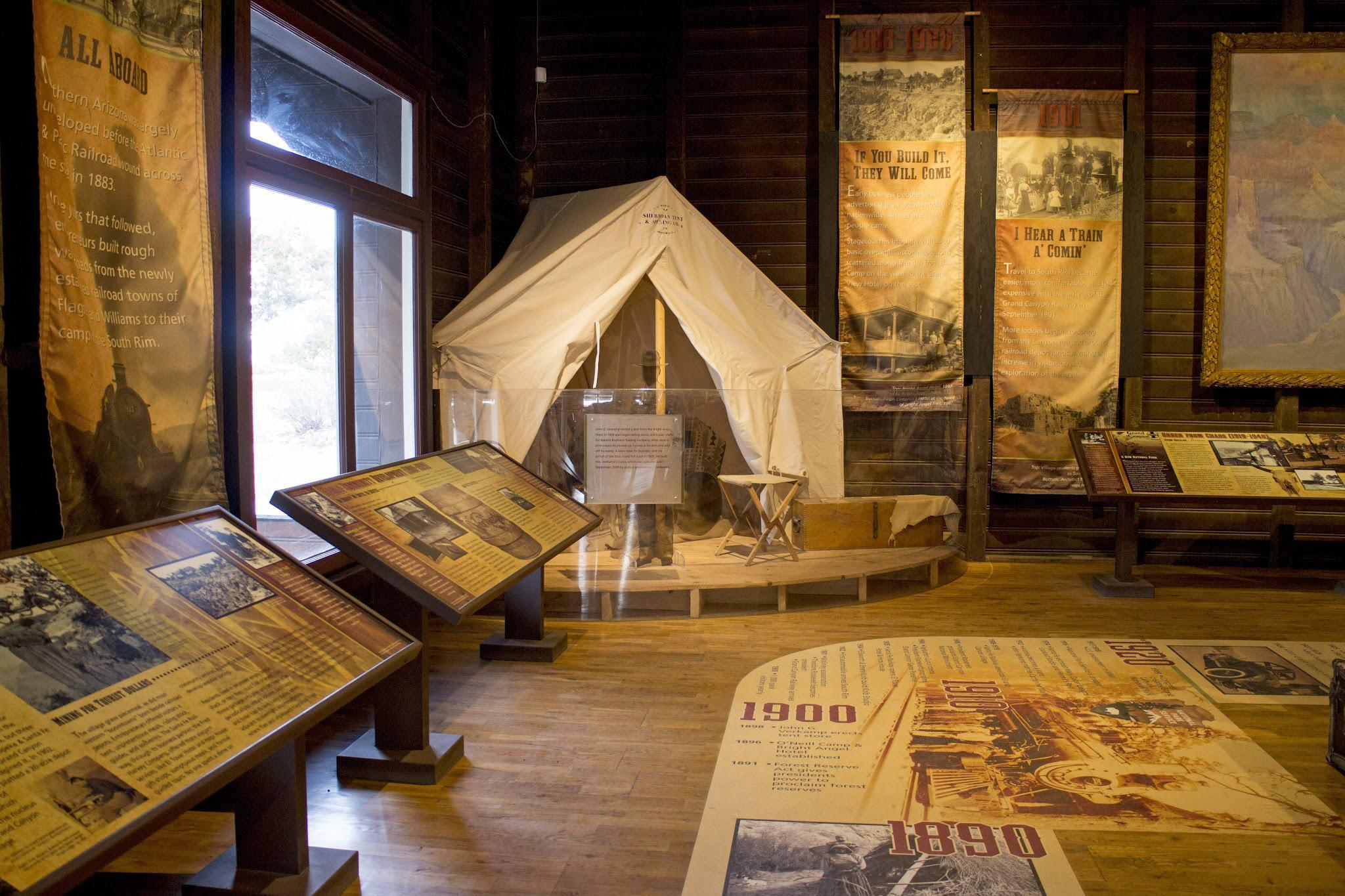
Grand Canyon Trail of Time Exhibition
(STEM Impact Identity Outcome)
USDE Hispanic-Serving Institution award: $3M.
CSM, LCOE, and JCAST came together once more to to implement “STEAM: Enriched Pathways.”
The “STEAM” project introduces CUREs and WBLOs. See Erin Dolan’s A Guide To Course-based Undergraduate Research and USDE’s Work-based Learning Toolkit.
Leverage State Initiatives
NSF Robert Noyce Teacher Scholarship award: $1.4M
The Department of Mathematics enrolled the entire graduate student cohort in the Leadership
Initiative of the San Joaquin Valley Mathematics Project, a branch of the California Mathematics Project.

NSF Robert Noyce Teacher Scholarship award: $1.5M
The Department of Mathematics’ award supported the 1st undergraduate student cohort
entering the ITEP (Integrated Teacher Education Program). The CSU Chancellor’s Office supported ITEPs to accelerate the pathway to becoming
a teacher, and Fresno State was just launching ITEP.

Leverage Independent Evaluators
Independent Evaluators: More Value Added
➤ In demand and highest credibility
➤ An independent evaluator can pay more attention to your award, his or her expertise
can align best with your work, and his or her services cost less.
➤ A ‘big center’ evaluation often charges more for its services, provides more general
expertise (such as STEM education vs. Math education), and has contracted evaluators
with a bunch of awards.

How do I find an independent evaluator?
Ask for referrals from colleagues about their colleagues: What external evaluators have they worked with?
Professional Sources:
American Evaluation Association
Institute of Education Sciences
Leverage Colleagues
Engage w/ Colleagues
Our own NSF Awardees for STEM Education or STEM Professional Development who are available
to discuss strategies for success:
1. Dr. Oscar Vega (Mathematics)
2. Dr. Alex Liu (Computer Science)
3. Dr. Yaomingxin Lu (Mathematics)
4. Dr. Rajee Amarasinghe (Mathematics)
5. Dr. Oka (Engineering)
6. Dr. Kimberly Stillmaker (Engineering)
7. Dr. Zoulikha Mouffak (Engineering)
8. Dr. Carol Fry-Bohlin (Education, especially STEM Education)

Reach out anytime:
Dr. Gil Harootunian, Executive Director,
University Initiatives
gharootunian@csufresno.edu
278-4850
This PDF is provided as a print-only reference document and may not be fully accessible to users of assistive technology. For more information, please visit Title II Rule on Digital Accessibility page.