Student Outcomes Assessment Plan (SOAP)
California State University, Fresno
Kremen School of Education and Human Development
MS Counseling: Option in Marriage, Family and Child Counseling
MS in Clinical Rehabilitation and Mental Health Counseling
Department/Program Assessment Coordinator: Dr. Sergio Perayra
I. Mission Statement
The faculty in the Department of Counselor Education and Rehabilitation has the responsibility for providing quality graduate programs in the counseling professions. The Department of Counselor Education and Rehabilitation two accredited programs: 1) MS in Counseling: Marriage, Family, and Child Counseling (MFCC) and 2) Clinical Rehabilitation and Mental Health Counseling (CRMHC). Our mission is to provide quality instruction and to contribute to our community through research, technical assistance, partnerships, training and other related public service activities. Our primary service areas include Fresno, Madera, Kings, and Tulare counties.
II. Institutional Learning Outcomes, Program Learning Outcomes/Goals, and SLO’s [a,b,c]
A. Institutional Learning Outcomes.
Fresno State ILO’s are posted on the following webpage:
http://fresnostate.edu/academics/oie/assessment/fresno-state-assessment.html
- Acquiring Specialized Knowledge
- Improving Intellectual Skills
- Applying Knowledge
B. Program Learning Outcomes (Also known as Goals) and related SLO’s
1. PLO (Goal): Prepare professional counselors with the knowledge to meet the needs
of an increasingly diverse and changing society.
SLO 1.1 Demonstrate a theoretical base and rationale for counseling
SLO 1.2 Identify the needs of people in a changing society related to human development,
cultural identity, social justice, and human sexuality over the life span
SLO 1.3 Articulate orally and in written form a theoretical base and rationale for
career development and describe the importance of career choice in a changing society
SLO 1.4 Demonstrate awareness to the existence of cultural diversity and develop sensitivity
to people of diverse backgrounds
SLO 1.5 Identify counseling, legal, and ethical concerns related to the needs of people
who are living and developing in a pluralistic society
SLO 1.6 Adhere to the legal statutes of the State of California and ethical standards
of the American Counseling Association.
SLO 1.7 Demonstrate knowledge of the research in advancing the counseling profession,
including how to critique research to inform counseling practice
2. PLO (Goal): Prepare professional counselors to practice effectively in collaborative
and interdisciplinary environments.
SLO 2.1 Maintain effective working relationships with members of the community.
SLO 2.2 Articulates and conduct effective crisis, trauma and emergency response management
SLO 2.3 Apply knowledge to conduct effective counseling
SLO 2.4 Accurately conduct diagnoses and apply measurement and evaluation in the field
of counseling including treatment planning.
SLO 2.5 Apply professional counseling expertise under direct supervision
SLO 2.6 Demonstrate essential interviewing, counseling, including group work, and
case conceptualization skills as well as evaluation of interventions
3. PLO (Goal): Prepare qualified counselors who are proficient in written and verbal
communications.
SLO 3.1 Use writing skills to communicate in a style and format (e.g., treatment planning,
documentation) consistent with the American Psychological Association Publication
Manual, 6th Edition.
SLO 3.2 Communicate with peers, professors, and supervisors in a manner that is consistent
with appropriate terminology and consultative practices.
4. PLO (MFCC GOAL): Provide students a high-quality graduate education program that
combines classroom instruction and supervised clinical experiences related to the
provision of individual, couples, marriage, family, child, and counseling
SLO 4.1 Demonstrate skills in assessment, evaluation, and case management when working
with individuals, couples, and families from a systems perspective.
SLO 4.2 Apply conceptualization and implementation of treatment, planning, and intervention
strategies in marriage, couple, and family counseling
5. PLO (CRMHC Goal): Provide students a high-quality graduate educational program
that combines classroom instruction and supervised clinical experiences aimed at the
acquisition of skills, reflexive practice and the development of competencies related
to the provision of services to people with disabilities.
SLO 5.1 Implement and maintain an active relationship to the broader rehabilitation
community and related professional associations through consultation, education, advocacy
and leadership activities.
SLO 5.2 Produce research and other scholarly information that is related to promoting
the rehabilitation and independence of people with disabilities using field experiences
as a guide.
SLO 5.3 Apply understanding of historical, cultural, ethical and legal considerations
related specifically to the practice of rehabilitation and mental health counseling
to promote high quality service provision to persons with disabilities
III. Curriculum Map [d]: Courses in which SLO’s are addressed and evaluated
| Courses | 1.1 | 1.2 | 1.3 | 1.4 | 1.5 | 1.6 | 1.7 | 2.1 | 2.2 | 2.3 | 2.4 | 2.5 | 2.6 | 3.1 | 3.2 | |||
|---|---|---|---|---|---|---|---|---|---|---|---|---|---|---|---|---|---|---|
| Courses for both Options: COUN 200 | I | I | I | I | I | I | I | I | I | I | I | I | I | I | I | |||
| COUN 201 | I | I | I | I | I | I | I | I | I | I | I | I | ||||||
| COUN 202 | I | I | I | I | I | I | I | I | I | I | ||||||||
| COUN 203 | I | I | I | I | I | I | ||||||||||||
| COUN 206 | I | I | I | I | I | I | I | |||||||||||
| ERE 220 | I | I | I | |||||||||||||||
| COUN 220 | I | I | I | I | I | I | I | I | I | I | I | I | M | |||||
| MFCC Option Courses | 1.1 | 1.2 | 1.3 | 1.4 | 1.5 | 1.6 | 1.7 | 2.1 | 2.2 | 2.3 | 2.4 | 2.5 | 2.6 | 3.1 | 3.2 | 4.1 | 4.2 | |
| COUN 230 | I | I | I | I | I | I | I | I | I | I | I | I | I | I | I | I | ||
| COUN 208 | D | D | D | D | D | D | D | D | D | D | D | D | D | D | D | D | ||
| COUN 231 | I | I | I | I | I | I | I | I | I | I | ||||||||
| COUN 232 | I | I | I | I | I | I | I | I | I | I | I | I | ||||||
| COUN 233 | I | I | I | I | I | I | I | I | I | I | I | I | I | |||||
| COUN 234a | I | I | I | I | I | I | I | I | I | I | I | I | I | I | ||||
| COUN 234b | I | I | I | I | I | I | I | I | I | I | I | I | I | I | I | |||
| COUN 234c | I | I | I | I | I | I | I | I | I | I | ||||||||
| COUN 234d | I | I | I | I | I | |||||||||||||
| COUN 234e | I | I | I | I | I | I | I | I | ||||||||||
| COUN 235 | I | I | I | I | I | I | I | I | M | M | ||||||||
| COUN 238 | M | M | M | M | M | M | M | M | M | M | M | M | M | M | M | M | M | |
| COUN 239 | M | M | M | M | M | M | M | M | M | M | M | M | M | M | M | M | M | |
| COUN 298 | M | M | M | |||||||||||||||
| COUN 299 | M | M | M | |||||||||||||||
| CRMHC Option Courses | 1.1 | 1.2 | 1.3 | 1.4 | 1.5 | 1.6 | 1.7 | 2.1 | 2.2 | 2.3 | 2.4 | 2.5 | 2.6 | 3.1 | 3.2 | 5.1 | 5.2 | 5.3 |
| REHAB 201 | I | I | I | I | D | I | I | D | I | I | I | I | I | I | ||||
| REHAB 204 | D | D | D | D | D | D | I | D | I | |||||||||
| REHAB 211 | D | D | D | D | D | D | I | D | D | D | ||||||||
| REHAB 237 | D | D | I | D | D | D | I | |||||||||||
| REHAB 238 | D | D | D | D | D | D | D | D | D | D | D | D | D | D | ||||
| REHAB 265 | D | I | D | D | D | D | D | D | ||||||||||
| REHAB 268 | M | D | D | D | D | D | D | D | D | D | D | |||||||
| REHAB 239 | M | M | M | M | M | M | M | M | M | M | M | M | M | M | M | M | M | |
| REHAB 298 | M | M | M | M | M | M | M | |||||||||||
| REHAB 299 | M | M | M | M | M | M | M |
For courses in the major, using the abbreviations below, indicate which outcomes are introduced, which are developed, and which are mastered in that particular course.
I = Introduced D = Developed M=Mastered
IV. SLO’s Mapped to Assessment Measures and Methods [e]
| Assessment Measure | Evaluation Method | 1.1 | 1.2 | 1.3 | 1.4 | 1.5 | 1.6 | 1.7 | 2.1 | 2.2 | 2.3 | 2.4 | 2.5 | 2.6 | 3.1 | 3.2 | 4.1 | 4.2 | 5.1 | 5.2 | 5.3 |
|---|---|---|---|---|---|---|---|---|---|---|---|---|---|---|---|---|---|---|---|---|---|
| Clinical Review | Rubric | X | X | X | X | X | X | X | X | X | X | X | X | X | |||||||
| Professional Dispositions | Rating Calculations | X | X | X | X | X | X | X | X | X | X | X | X | X | X | X | X | X | X | X | X |
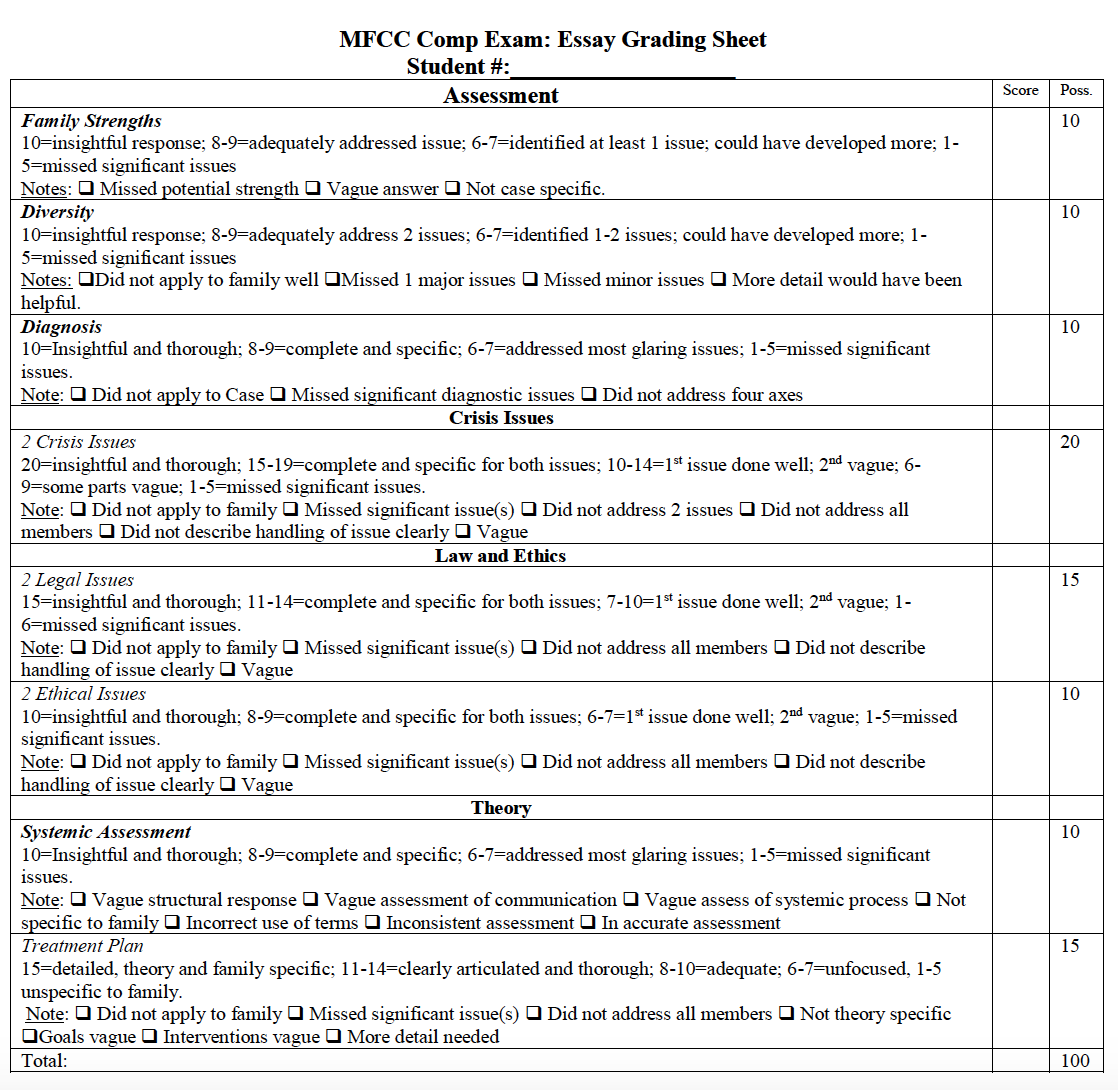
| Comp Exam | Rating - Rubric | X | X | X | X | X | X | X | X | X | X | X | X | X | |||||||
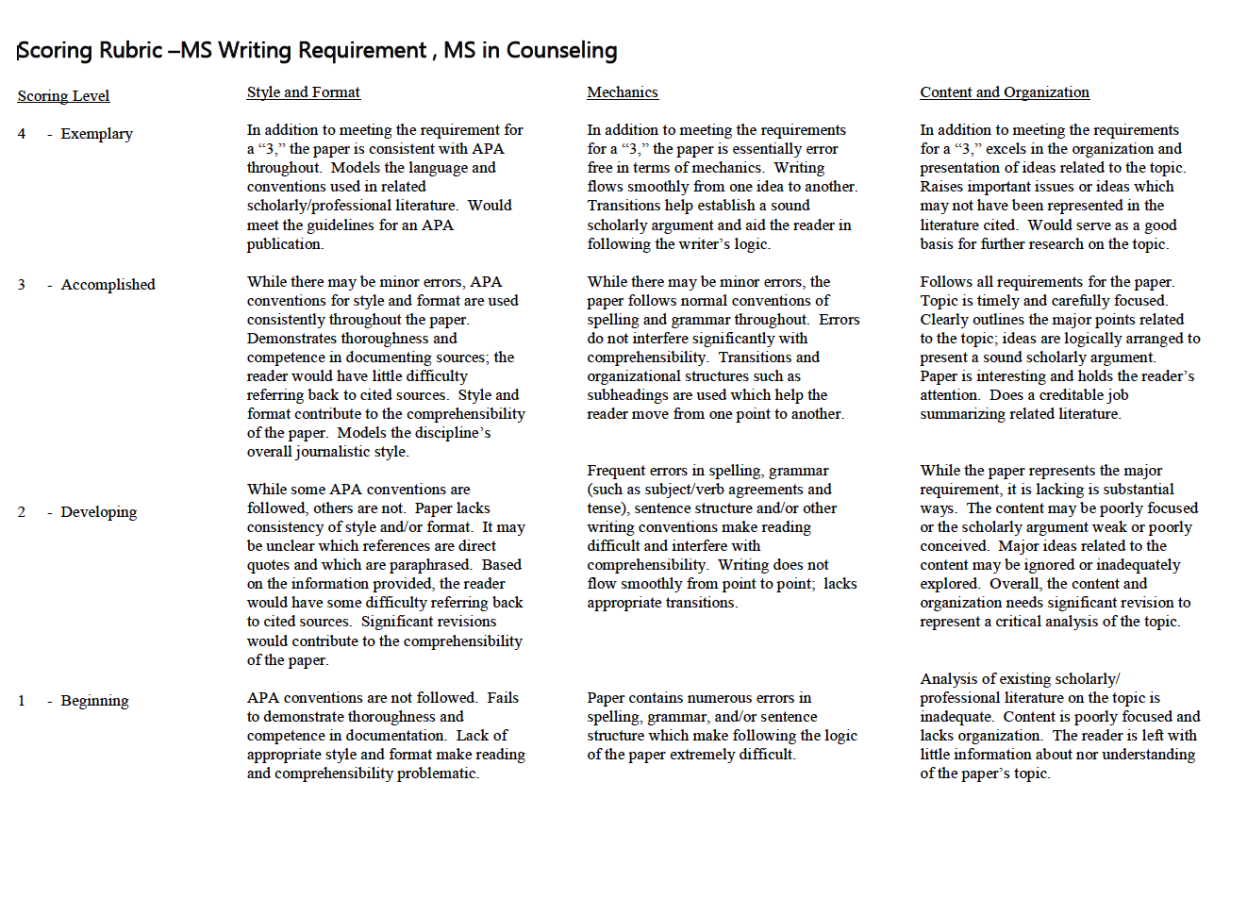
| Graduate Writing Requirement | Rubric | X | X | X | X | X | |||||||||||||||
| Field Placement Surveys | Rating calculations | X | X | X | X | X | X | X | X | X | X | X | X | X | X | X | X | X | |||
| Comp Exam Project Thesis | Rubric | X | X | X | X | X | X | X | X | X | X | X | X | ||||||||
| Employer Survey | Rating calculation | X | X | X | X | X | |||||||||||||||
| Exit Survey | Rating calculation | X | |||||||||||||||||||
| Alumni Survey | Rating calculation | X | X |
V. Assessment Measures: Description of Assignment and Method (rubric, criteria, etc.) used to evaluate the assignment [f]
A. Direct Measures (Department/Program must use a minimum of three different direct measures)
- Clinical Review -- conducted in Rehab 201 (preliminary) for CRMHC students and Counseling
Practicum (COUN 208 and REHAB 238) for both programs
- The Clinical Review is a required assessment of all students that examines counseling dispositions, skill level and appropriateness for the counseling profession.
- Graduate Writing Requirement – Writing competency evaluated by reviewing a writing sample prior to advancement to candidacy.
- Professional Counseling Dispositions – Conducted in all Practicum and Field-placement/Internship
courses
- Counseling Dispositions measures the student personal characteristics, attributes and qualities an ideal counselor might possess)
- Field Placement – Practicum Evaluation on Counseling Competencies and Professional Dispositions.
- Comprehensive Exams or Master’s Project/Thesis
B. Indirect Measures (Department/Program must use a minimum of one indirect measure)
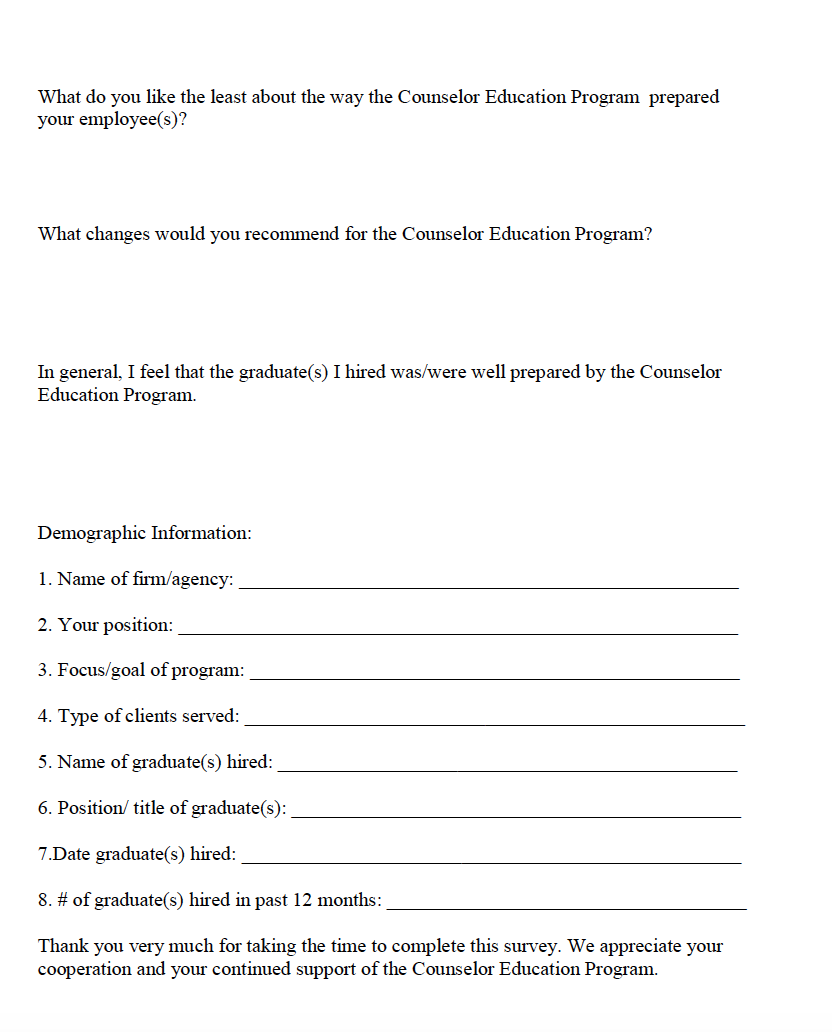
- Employer Survey
- Site Supervisor Survey
- Exit Survey
- Alumni Survey
- Advisory Board feedback
| Assessment Activity | Responsible Faculty | Timeline |
|---|---|---|
| Graduate Writing Requirement | COUN 220 instructors and GWR Committee | Semester |
| Field Site Evaluations | COUN/REHAB 239 instructors | Semester |
| Comprehensive Exam | Chair, Comp Exam Committee | Semester |
| Advisory Board | Program Coordinators | Biannually |
| Clinical Review | COUN 208 instructor and Department Clinical Review Committee | Semester |
| Alumni Survey | Program Coordinator | Annually |
| Exit Survey | KSOEHD | Semester |
| Employer Survey | COUN 239 instructor/ Program Coordinator | Semester |
VI. Assessment Schedule/Timeline [g]
| Academic Year | Measure | 1.1 | 1.2 | 1.3 | 1.4 | 1.5 | 1.6 | 1.7 | 2.1 | 2.2 | 2.3 | 2.4 | 2.5 | 2.6 | 3.1 | 3.2 | 4.1 | 4.2 | 5.1 | 5.2 | 5.3 |
|---|---|---|---|---|---|---|---|---|---|---|---|---|---|---|---|---|---|---|---|---|---|
| 2017-2018 | Clinical Review | X | X | X | X | X | X | X | X | X | X | X | |||||||||
| 2018-2019 | Professional Dispositions | X | X | X | X | X | X | X | X | X | X | X | X | X | X | X | X | X | X | X | X |
| 2019-2020 | Graduate Writing | X | X | X | X | ||||||||||||||||
| 2020-2021 | Employer Survey | X | X | X | |||||||||||||||||
| 2021-2022 | Field Placement | X | X | X | X | X | X | X | X | X | X | X | X | X | X | X | X | ||||
| 2022-2023 | Comp Project | X | X | X | X | X | X | X | X | X | X | X | |||||||||
| 2023-2024 | |||||||||||||||||||||
| 2024-2025 |
VII. Closing the Loop [h,j,k]
Fresno State Closing the Loop process is described immediately below.
A major assessment report, which focuses on assessment activities carried out the
previous academic year, is submitted in September of each academic year and evaluated
by the Learning Assessment Team and Director of Assessment at Fresno State.
Program/Department Closing the Loop process: The faculty in the MS in Counseling department
in both the Option in Marriage, Family, and Child Counseling and the Option in Clinical
Rehabilitation and Mental Health Counseling have developed a joint SOAP and implemented
assessment activities. The program coordinators for the two options, in conjunction
with the department chair, will be responsible for overseeing the gathering and analysis
of assessment data that relates to the departments programs and student learning outcomes
going forward. It will be the program coordinator’s responsibility to provide program
faculty with a summary of data gathered through the assessment process. It should
be noted that all program faculty will collect analyze, and review on class assignments/administrative
duties. The entire faculty will review the assessment data and discuss specific steps
to address any issues that are identified as a result of the evaluation of student
work.
MARRIAGE, FAMILY AND CHILD COUNSELING APPENDICES
COUNSELOR EDUCATION PROGRAM
CALIFORNIA STATE UNIVERSITY, FRESNO
CLINICAL REVIEW OF PROFESSIONAL PERFORMANCE
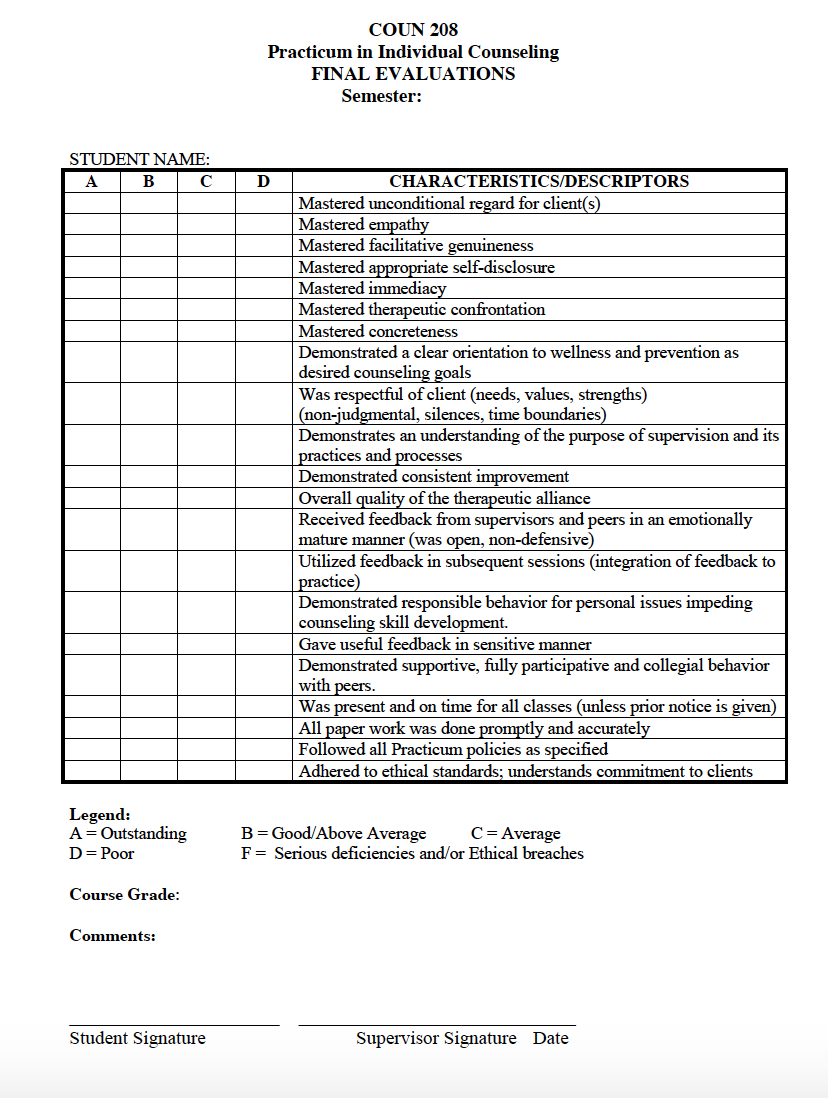
Professional Counselor Disposition Assessment
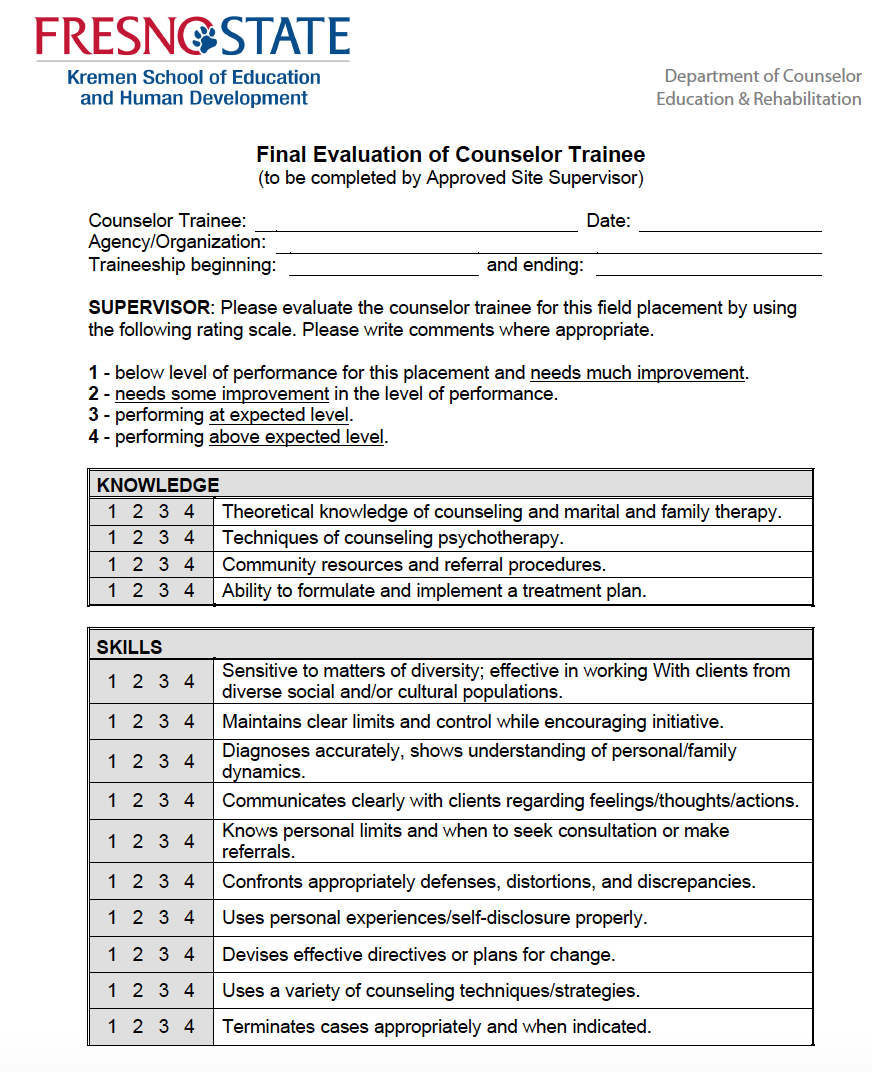
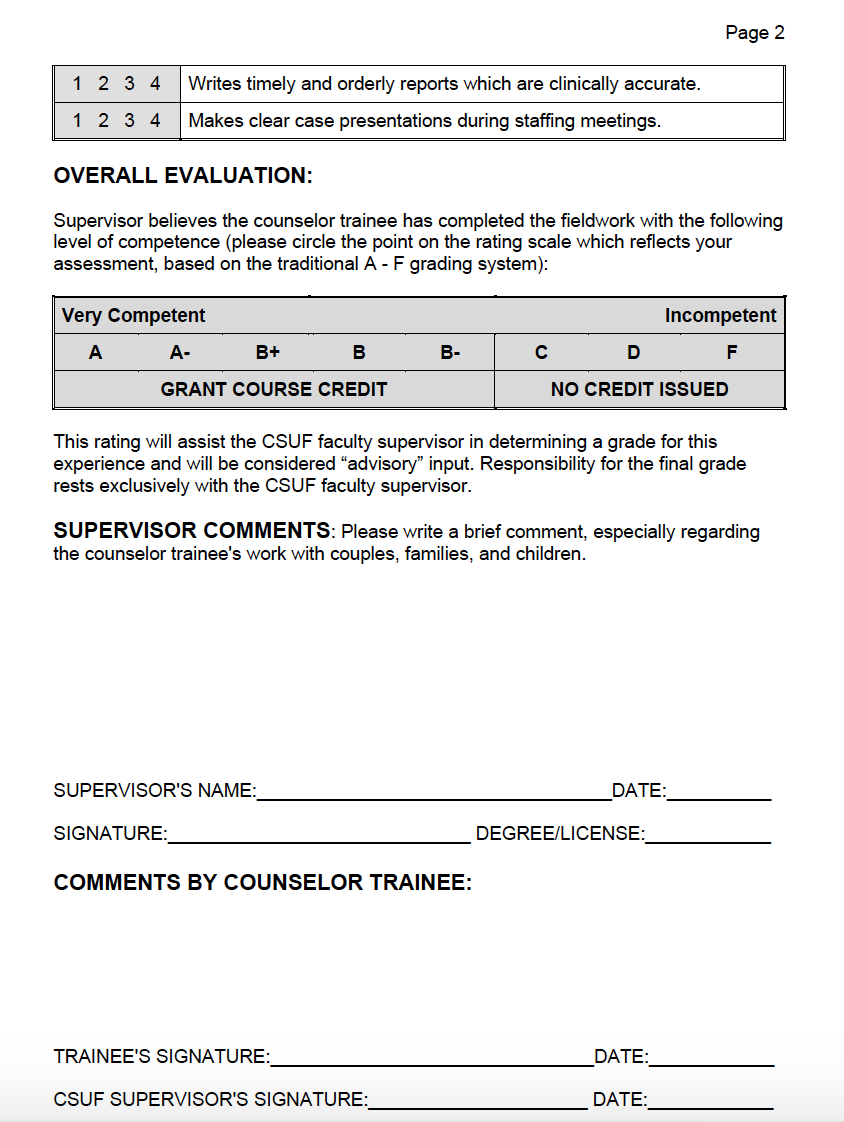
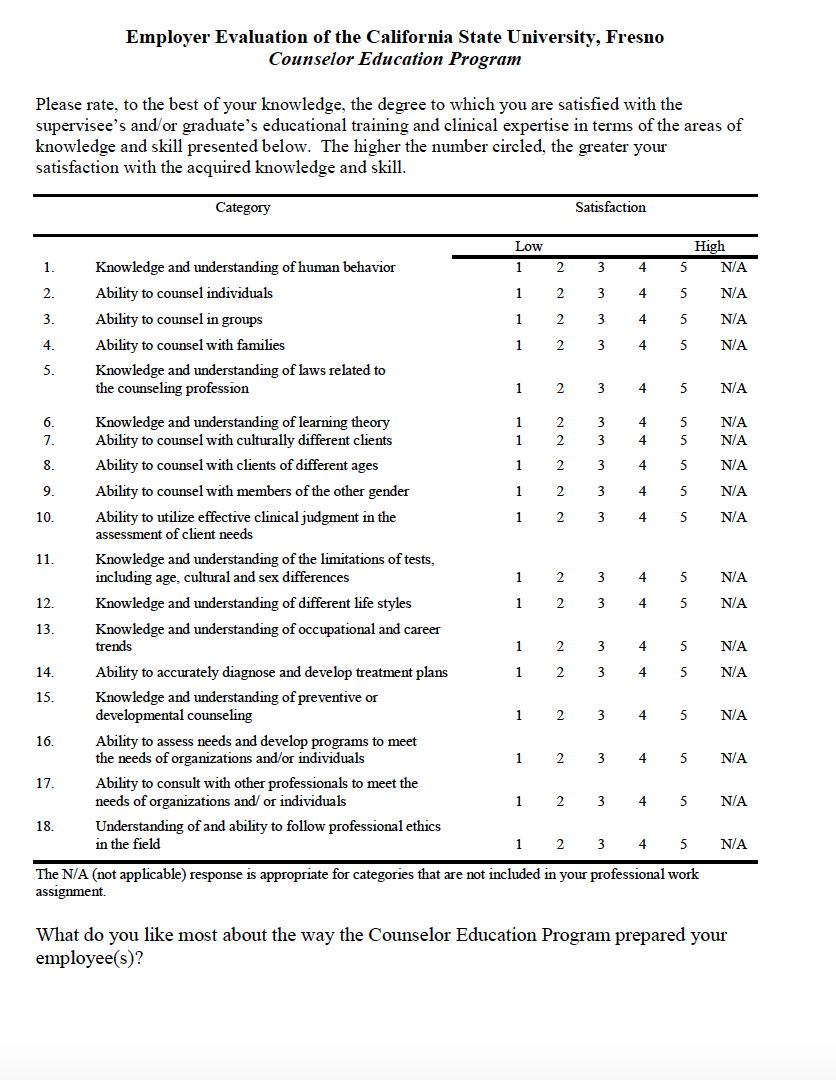
CLINICAL REHABILITATION AND MENTAL HEALTH COUNSELING APPENDICES
A. Clinical Review Snapshot
B. Graduate Writing Requirement
C. Professional Counseling Dispositions
D. Field Placement Evaluations Snapshot
E. Comprehensive Exam Essay Scoring Rubric
F. Employer Survey Snapshot
G. Site Supervisor Survey Snapshot
H. Exit Survey Snapshot
I. Alumni Survey Snapshot
This HTML version was generated with AI assistance and may contain errors or omissions. The original approved PDF remains the official document of record. An alternative accessible format is available upon request from the document creator in accordance with Title II of the ADA.